Monday, January 1, 2024

Prediction for 2024 in Stocks

Admittedly, maintaining a clear chain of thought and an open mind regarding the market's reaction as the new year approaches is a simpler task. This is particularly crucial for active traders who are deeply involved in the market. Conversely, for those focused on long-term investments, a different mindset is necessary. It involves disregarding short-term fluctuations, staying steadfast, and exercising patience.

Last year, I significantly reduced my trading account margin to nearly 50%, bringing it close to a cash position. I am now prepared to allocate new funds based on the trends anticipated in the upcoming year. However, I must acknowledge that I am not yet a seasoned expert, having only five years of experience in the market. Despite this, I find excitement in the unpredictable nature of the market and continue to navigate the game of anticipating future developments.


Before delving into those questions, there are three uncertainties for which I lack answers:

  1. Does oil have a future?
  2. Will money flow into the Chinese market?
  3. What is the Federal Reserve's plan regarding its balance sheet?

Details below: 

As observed, the global shift towards renewable energy is evident, especially with the electric vehicle revolution spurred by substantial government support worldwide. Although oil remains extensively utilized in various sectors, the production of electric vehicles and the requisite infrastructure are not yet at a level to entirely replace traditional vehicles. President Biden mentioned last year that oil is projected to persist for the next decade, but investors, known for their proactive stance, may not wait if they perceive an industry as lacking a future. Interestingly, the past two years witnessed significant momentum in many oil stocks. Whether this momentum will continue into 2024 remains a substantial question. The trajectory could be influenced by several factors, including global elections, particularly in the USA. The outcome of the elections, particularly if Trump were to win, might reinvigorate optimism in the oil industry. However, it's crucial to note that this scenario is speculative and contingent on numerous factors.

The Chinese market has experienced a substantial correction since early 2021, reaching a point where many investors are eagerly awaiting signs of a potential turnaround. A notable example is Alibaba, the Chinese e-commerce giant, which has seen its revenue soar from $10 billion in 2014 to nearly $130 billion. Despite this impressive growth, its stock price and market capitalization have remained stagnant. Currently, with a profit of $20 billion, Alibaba is trading at a remarkably low P/E ratio of less than 8, indicating significant undervaluation.

However, the prevailing downturn in Chinese stocks is often attributed to external factors, with some suggesting that it may be a consequence of Western scrutiny, possibly linked to the COVID-19 pandemic or concerns about China's economic ascent challenging the USA's position. This situation, seen by some as a form of Western reprimand, has led to suppressed valuations for Chinese companies.

Nevertheless, the sheer scale of China's economic growth and the robust financial performance of companies like Alibaba make them potentially attractive opportunities. As sentiments evolve and perceptions shift, it is anticipated that money will eventually flow back into the Chinese market, driven by the undeniable allure of its substantial economic expansion. The undervalued nature of companies like Alibaba, despite their remarkable growth, might be too compelling for investors to ignore in the long run.


Last but not the least - Fed. In the coming months, the Federal Reserve's decisions will significantly influence the market dynamics. While the market anticipates up to six rate cuts in 2024, the Fed has only officially announced three in their recent meeting. The likely scenario may fall somewhere in between, perhaps around four rate cuts, considering the current low unemployment figures. The Fed is unlikely to rush given the stable employment situation, and the number of rate cuts may be contingent on inflation staying within the 2 to 3% Year over Year range.

The specific number of rate cuts, whether it be three, four, or six, may not have a drastic impact on the market. However, the uncertainty lies in the Fed's approach to its balance sheet. During the COVID-19 pandemic, the Fed's balance sheet ballooned from 3 trillion to 9 trillion due to a substantial injection of funds into the economy. While they have reduced it by one trillion so far, the future trajectory remains uncertain.

The question revolves around whether the Fed will expedite balance sheet reduction in response to significant bond buying activity in the market, potentially aiming to bring it down to 6 trillion. This move would involve withdrawing 2 trillion from the market. The timing and strategy the Fed adopts for this process remain uncertain, and it will be a crucial factor to watch in understanding the broader economic landscape.


Financial Stocks, Big Banks, and FinTech (e.g., PayPal and SoFi):

The potential uninversion of the yield curve due to reduced rate cuts is likely to benefit financial stocks, especially big banks. Additionally, FinTech companies, like PayPal and SoFi, could see positive impacts from these market dynamics.

Biotech Stocks:

Despite the usual rhetoric on reducing drug prices during election years, the chart patterns of biotech stocks suggest a decade-long base, indicating a potentially safe sector to invest in.

Material Stocks:

Material stocks, which have faced declines due to a reduction in inflation, may witness increased activity in the second half of the year. This could be driven by a resurgence in commodity buying, excluding oil.

Tech Sectors (Cloud, Chips, and Cybersecurity):

Companies in the technology sector, especially those involved in cloud computing, chip manufacturing, and cybersecurity, may continue to see momentum. In an environment of decreasing inflation, companies capable of maintaining high prices are likely to sustain growth.

Cryptocurrency:

The crypto market is anticipated to maintain its momentum, with the possibility of Bitcoin revisiting its all-time high. This aligns with the broader trend of increasing interest and adoption of cryptocurrencies.


Small Caps and Bonds: Small caps (IWM) have also formed long base of going nowhere for last five years and with reduction in interest rate and small caps having plenty of regional banks in it - most likely will outperform major indexes such as SPY, QQQ.

My detail lists of stock picks are listed here: https://viralpatel15.blogspot.com/2023/12/2024-stocks-picks.html


Monday, December 25, 2023

2024 Stocks Picks

 Top 20 2024 Stocks: 


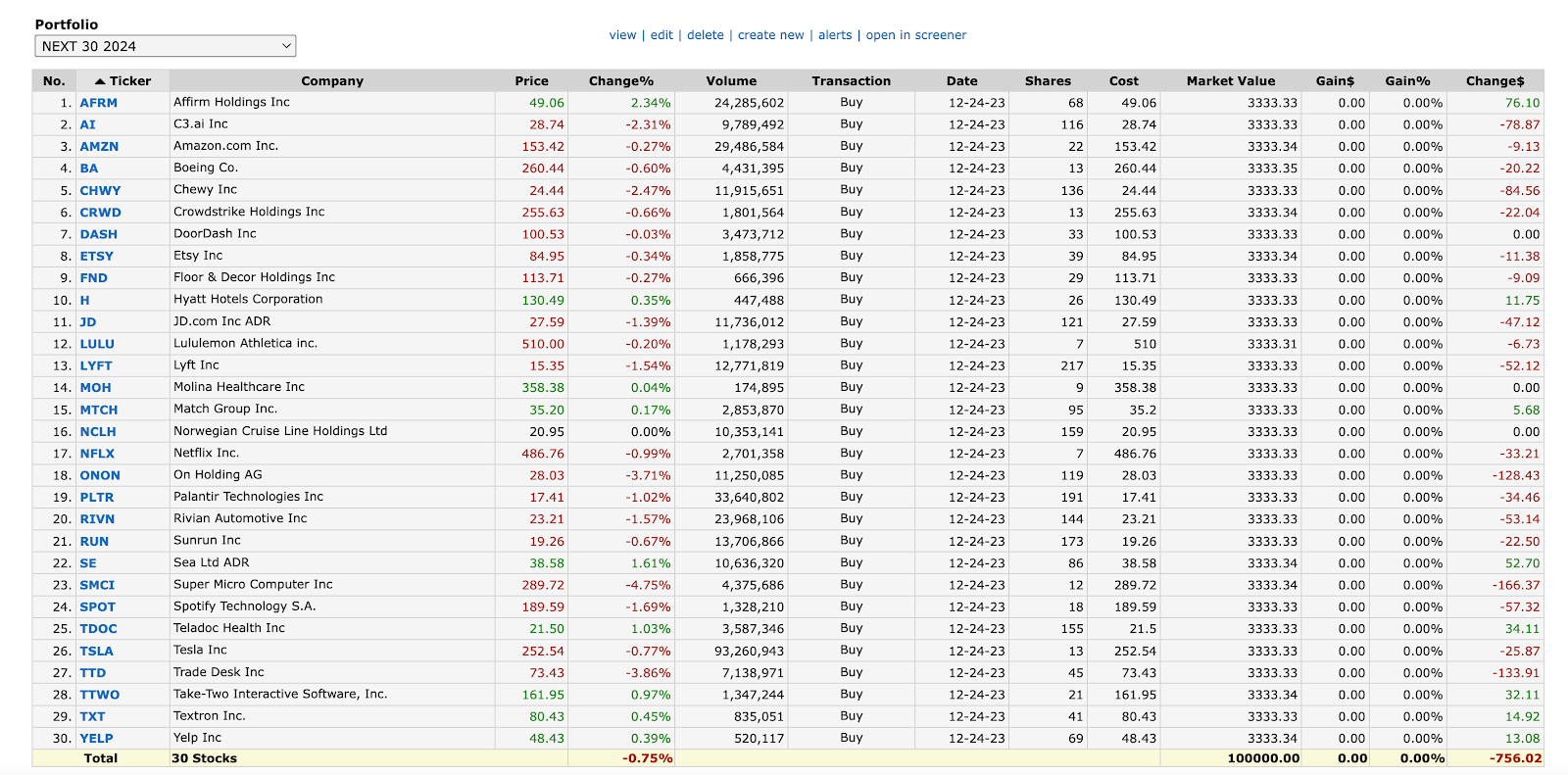
Next 30 Stocks for 2024: 


Dividend Growth 40 Stocks: 


Final 50:


3$ Weekly Risky Picks: 


2023 Portfolio Performance

Last year (December 25, 2022) - I created 6 portfolio and following are the result as of today (December 25, 2023). 

Top 20 stocks Portfolio (where I buy 5$ on Daily basis): 167,366.59$ (100K invested)

Next 30 Portfolio (where I buy 3$ on Daily basis): 137,971.57$ (100K invested)

Next 30 Portfolio (where I buy 2$ on Daily basis): 139008.38$ (100K invested)

Last 60 Portfolio (where I buy 1$ on Daily basis): 130088.65$ (100K invested)

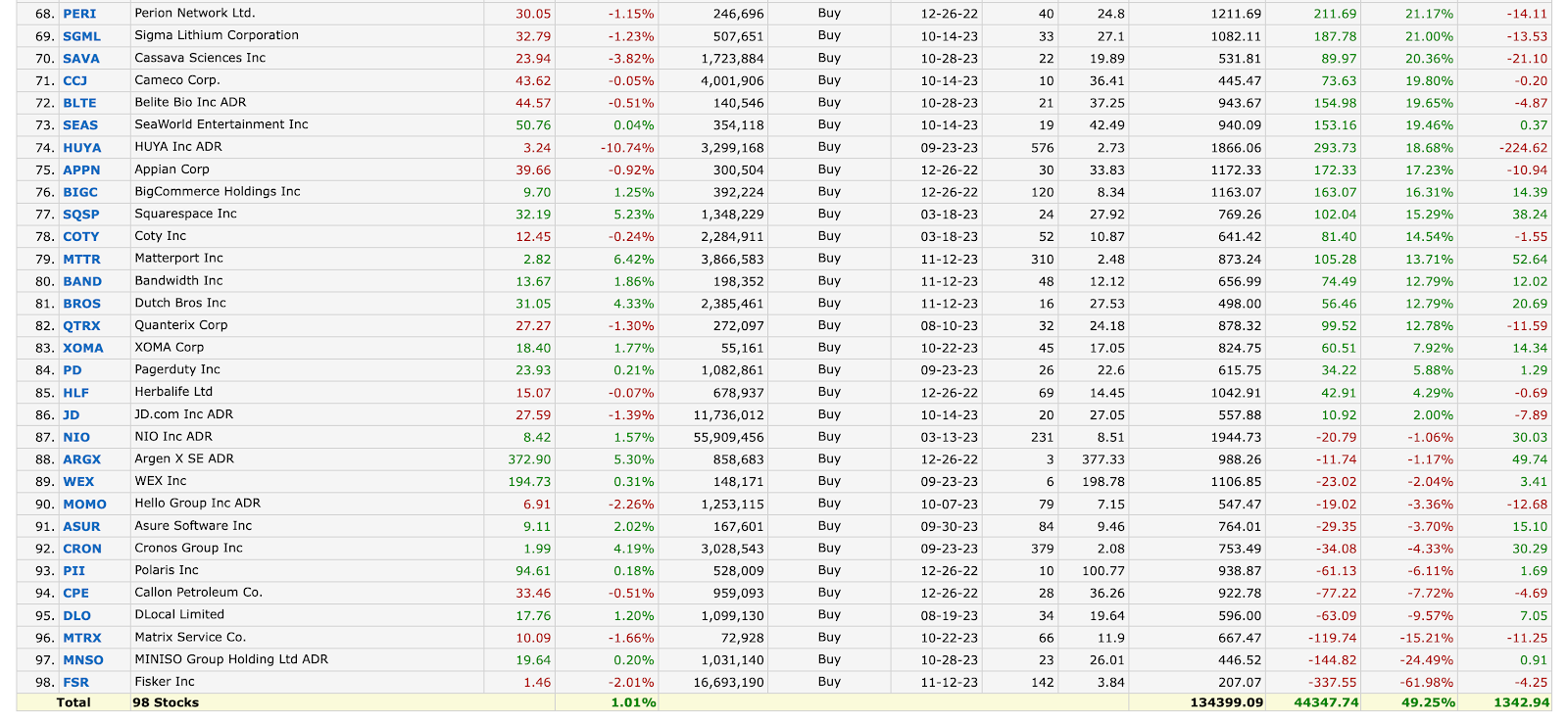
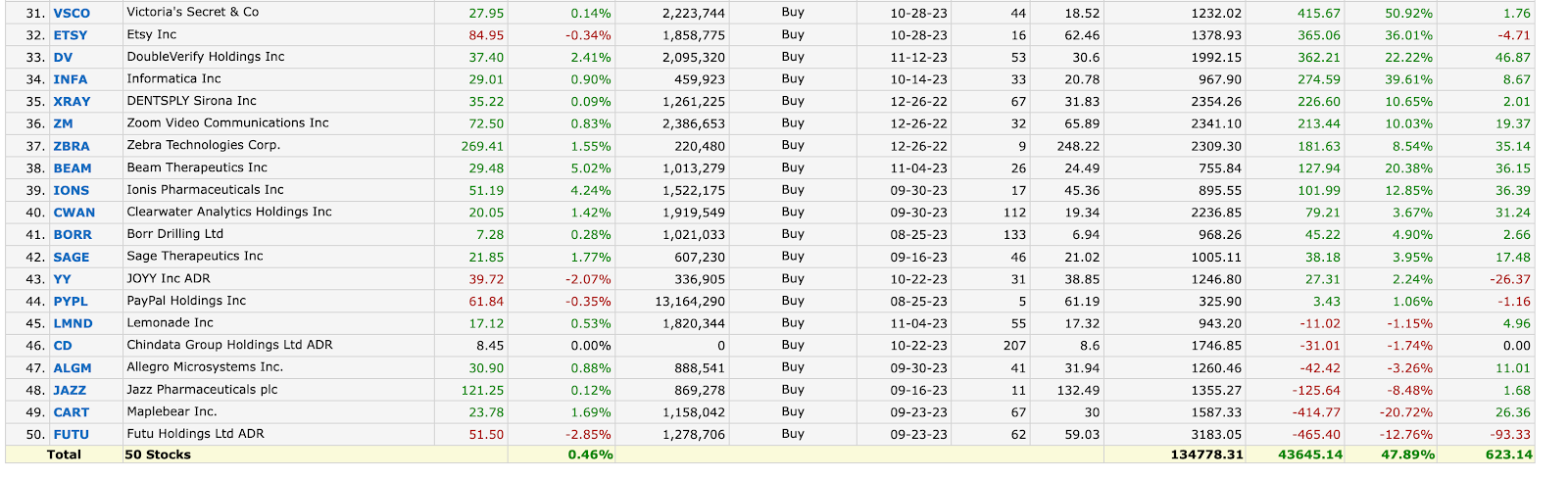
3$ On weekly basis to remaining 150 stocks: 134,399.09 and 134778.31$ (200K Invested) 

Note: Since Finviz at that time allowed maximum of 100 stocks to be tracked in a portfolio, I divided 3$ weekly portfolio in two bracket, one had 98 stocks and other one had 50 stocks. 

Overall, 600K invested (on paper) resulted in 843,612.59$ (40.6% gain). Just to compare results, SPY is up 23.70% during the same time period and QQQ (Nasdaq 100) is up 52.75%. 

Following are the screen shots for each portfolio performance: 


Thursday, November 2, 2023

Thoughts on Apple

From 2019 lows - Apple stock has went from under $40 to almost $200 - close to 500% gain. But in five years, their revenue has not gone up 500%. Hack - its not even doubled. Their revenue increased from 265 Billion a year to roughly 400 Billion dollar a year. Their earnings have doubled but does not justify 500% gain in the stock price. 

Apple has lot of issues to cover up - Their profit margin is not growing anymore. They are expected to announce 4th quarter in a row -where they are going to show declining earnings and profit. Their iphone sales are not climbing in year over year data. Their growth market China has already ban them for government use. 

Apple is currently valued at 29 P/E ratio - highest it has ever been traded. Usually, third quarter is Apple's worst quarter (as they sell more stuff during holiday's season - 4th Quarter). So I would be not even cautiously optimistic, I would be very cautious on going into ER. 

Overall, market might be looking at Job data as prime indicator than Apple's earnings, but if it gaps up - it will most likely be sold. From technical chart perspective, it does look like it is going to visit 157 mark at some point. Perhaps not immediately after ER, but at some point. 

Soft Landing Probable?

Till yesterday- sentiment across the market was too negative. Clearly economy is slowing down but until yesterday there was no sign of Fed to stop raising rates. Although S&P has just declined 10% from the recent high in July - it was the overall effect that was being felt across the market. 


To just give a background IWM was where it was 5 years ago. That is small caps. 5 years of no return. 30% of the companies in IWM are still facing fear of bankruptcy. Technically it was in the verge of breaking down. Although S&P was not declined to that level but it is also at the same level 2 years ago. If you dollar cost average in S&P like I have since March 2021 - you have negative returns. Only handful of companies had positive overall returns while rest of the market struggles. 


I used to know a friend - whose father committed suicide in India when stock market crashed. I never understood that at that age but I could see or feel that fear - yesterday. It is not the market crash that kills people - it is the lack of hope that kills them. When you are 60 odd and you have all your life earnings put in the market and it crashes 50-60% - you can somehow gather the courage that market will bounce back - it usually do - it almost always do - but it when you lose that hope - that’s what kills people - usually old people - because they don’t have the years left for to remain hopeful. Japanese market has not seen the all time high since last 45 years. Imagine waiting for that. Situation was that bleak. 


My own 401k returns were negative since last 4 and half years till yesterday. So - today - although Powell did not declared a victory - but his speech and stance installed the much needed hope. 


The most important statement from todays speech was - that Fed feels there is equal amount of risk in raising or not raising rates. This means Fed does see signs of slowing economy and panic in the market. Fed also understands one more rate hike could break the market and economy. This is second consecutive pause and there is high probability that Fed is done raising rate now. 


This will install fear in the bond buyers the most. They may not see 5% Yield in longer term bonds. That means we may see first rally in bonds starting tomorrow. Particularly longer to medium dated bonds. 7 year- 10 year yield should decline as there will be demand for bonds. Yield decline temporarily also help stocks. Particularly mega cap stocks - but that rally will fade soon as rates are still very high and Economy is slowing. 


However - bonds will continue to rally and any signs of them going near to 5% yield - they will be bought. For stocks - it will stock pickers market for next 6 months - There are companies which is generating good cash flow and has better balance sheet - with low debts - will see buyers but there are others who has lot of debts will continue to struggle and sell off. We are still in higher for longer market and Fed is not thinking about thinking about thinking about cutting rates. 


However if inflation and job data support for next 2 to 3 months - particularly in Feb 2024 when we get Jan inflation print and that shows Year over Year growth of below 3% - Fed will start saying rate cut is coming - probably in June 2024. 


However next 6 months are critical for soft landing. Unemployment shouldn’t rise above 5% -  Mortgage rate need to decline to at least 6% from 8 - and inflation print needs to show below 3% for 2 or 3 months in 2024. Should all that happen we can consider we are out of this mess and pain ride. 

Wednesday, May 10, 2023

Thoughts on DISNEY

 Thoughts on Disney: 


Disney is valued at 180 billion dollar - roughly the same number that it was valued in 2015. For almost 8 years - stock price/valuation of the company has went no where. Yes- there was a good “trade” opportunity when it went to 80$ stock price during covid low of 2020 and went as high as 200$ during market peak in 2021, but it is back to where the price of the stock is in 2015 (just below 100$). There are multiple reason behind it. 


1. Company was decently priced back in 2015-2016 era. They were making 55-60 billion dollar in revenue - spending total of 45 billion and creating a profit of 9 to 10 billion dollars. You generally give 18 to 20 times profit as your valuation and hence it was valued roughly 180-200 billion dollar valuation. But there was no “Growth” - neither in Revenue nor in profit. 

2. So, they made the acquisition of “FOX” assets in 2015 for 70 odd billion dollars. If they would have executed that deal well - it might have worked out, as they were making 10 billion dollar in profit, they had some cash in hand - so to compete with Netflix and jump in the streaming business was the right approach. 

3. However, the problem was - completion of the deal took almost 2 years and in the mean time, Board was unwilling to pay their CEO Bob Iger big salary. So he wanted to move on and retire. Perhaps he had some political ambitions (not sure), but him leaving and not seeing through the completion of the FOX deal and success of Disney Plus - created big issues. 

4. On top of it - Disney Board made their next CEO as someone who handled their PARK - resulting in less focus on Disney Plus/ Movies. Their movie content went below par, parks were unable to do business during Covid, and they also had debt of buying fox assets for 70 billion (not all , but some debt). 

5. Disney board realized their mistake and got Bob Iger back but he said - he is here only for 2 years. He will probably focus on fixing issues with Disney Plus, but we are not so sure on who is going to take over once he leaves. 


So, now we have a company which makes 80+ billion in revenue but they spend 75+ billion - resulting in profit of only 3 to 5 billion dollars. Based on their current profit - it should be valued 1/3rd of it - but investors are willing to give a chance to Bob Iger to do his magic and put Disney back to business. But there are lot of issues..


1. Their current political fight with Florida Governor - put park business in a Jam

2. Political issues between US and China - also put their park business or movie business in china in a jam. 

3. ESPN is consistently losing money for years and they are not able to create a separate company for it. 

4. Hulu - seems to be a product that neither consumer, nor NBC/Comcast wants to buy from them.

5. Hotstar - Fox asset is also losing money. 

6. Debt they pilled up to get money for FOX Assets - now has increased interest based on Fed interest rate moving from 0 to 5%. 


Even if every issue gets resolved and some how Bob puts company back to 2015-2016 era of resulting in 9 to 10 billion dollar profit (which market assumes, he will in a year or two), that puts company valuation exactly where it is now. So, in order for it to “GROW” - it has to resolve all of above issues - and be able to compete with Netflix/Amazon on streaming business (which is a very tough ask). Market has so many great opportunities, I am not sure it is wise to stick to company just for the “Brand” name it has - in a hope that it will go back to it’s Glory days - plus - they do not even pay Dividend anymore (rightly so as they don’t have money for it). 

Sunday, April 30, 2023

Trading advice

Most traders lose money; Most investors make money. 

You have to find a balance between "Trading" vs "Investing". Almost every investment, should start as a trade, but if it has worked - you need to hold on to it, for longer duration to become investment. Recipe of success is 

  • Create an "Investment" account and deposit money in it for years and years. Whatever you can save - put it in it with the intention of never selling a stock. Invest wisely and in a good companies. Ideally, don't touch that account until it has went to significant amount - preferably a million dollars. It may take 10, 15 years to get there, but its worth it. 
  • Once it has reached the first million - with an average return of 8% or so - you should make a return of 80,000$ next year.
  • Transfer that profit - into a "Trading" account. Now, this is "House" money that you can play with. You may gamble it with options - risky stocks etc. 
  • Since you have done the hard work in first 10-15 years of creating an investment portfolio of a million dollar - you now have luxury to play around each year with 80,000 to 100,000$ a year. If you make it big - great (because now you also have 10-15 year of experience of being in the market)- chances of massive errors are less but even if there are - it is the house money that you are losing - which you will get a new set of money to play with next year. 
  • First step is the hardest though - It is not "Easy" to be able to "Save" a million dollars - and keep it in the market for long term and not touch it (touch it and you lose it).